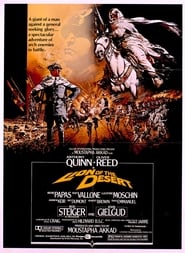
“Lion of the Desert” tells the story of Omar Mukhtar, a Libyan resistance fighter who fought against Italian colonization in the 1920s and 1930s. Mukhtar is portrayed as a lion, fiercely and tirelessly fighting against his oppressors. He becomes a thorn in the side of the Italian army, elusive and unrelenting like a desert storm. Despite being outnumbered and outgunned, Mukhtar and his fighters refuse to surrender or submit to their enemies. The movie is a powerful depiction of one man’s determination to protect his people’s freedom in the face of overwhelming odds.
CLICK HERE⤓⤓⤓🎫_Watch Lion of the Desert 1981 English Subtitles_
Review
The sun beat down relentlessly, baking the sands of the Sahara into an unyielding surface. The wind carried with it the scent of sweat and gunpowder as the warring factions clashed in a desperate struggle for control. Amidst this chaos, a single figure stood tall, defiant in the face of overwhelming odds – Omar Mukhtar, the Lion of the Desert.
The movie “Lion of the Desert” is a cinematic masterpiece that captures both the brutality and beauty of war, painting a vivid portrait of one man’s fight against injustice. Directed by Moustapha Akkad and released in 1981, it stars Anthony Quinn as Omar Mukhtar, a Libyan rebel who leads his people in an uprising against Italian forces during World War II.
The storyline is based on true events that occurred between 1929 and 1931, when Mussolini’s fascist regime attempted to conquer Libya. Omar Mukhtar emerges as an unlikely hero in this conflict, leading his men with courage and conviction despite knowing that they face almost certain defeat.
The plot follows Mukhtar’s journey from his capture by Italian forces to his eventual execution, depicting both his strength and vulnerability along the way. Despite being outnumbered and outgunned, he refuses to back down or surrender.
One memorable quote from the film comes from Mukhtar himself: “We will not be conquered by these foreigners who take our land and sweat our people into submission”. This line perfectly encapsulates his determination to fight for what is right no matter what.
Anthony Quinn delivers a powerful performance as Mukhtar, imbuing him with equal parts grit and soulfulness. His portrayal brings to life this heroic figure whose legacy has often been overlooked by history.
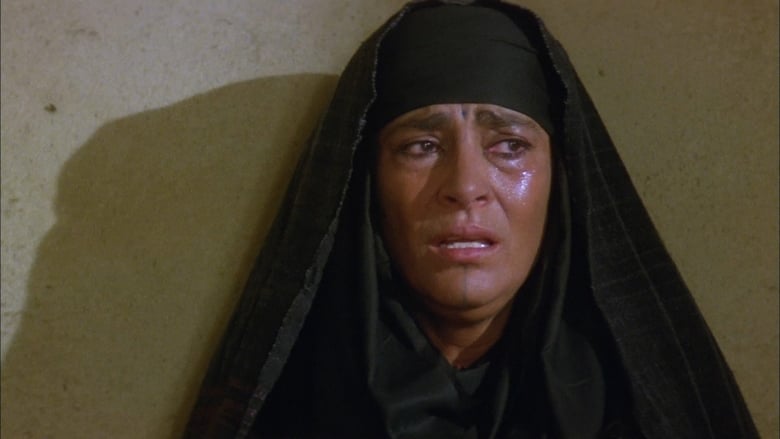
Other standout performances come from Oliver Reed as General Rodolfo Graziani, a ruthless Italian commander who serves as Mukhtar’s nemesis throughout much of the film. Also noteworthy is Irene Papas as Zohra, a woman who becomes one of Mukhtar’s closest allies and confidants.
The historical context of the film is equally compelling. While many Americans may be familiar with World War II, the conflict in Libya is often overlooked. “Lion of the Desert” sheds light on this forgotten part of history, highlighting both the struggles and triumphs of the Libyan people.
The score and popularity of this film are also noteworthy. Composer Maurice Jarre brings a sweeping, epic quality to the music that perfectly complements the film’s visuals. It has been praised for its use of traditional Arabic motifs, which lend an authentic feel to the production.
Filming this epic movie was a challenging process, with much of it being shot on location in Libya itself. The crews had to deal with extreme heat and difficult conditions (including a sandstorm that destroyed much of their equipment), but their efforts paid off in a beautifully crafted film that captures both the harshness and beauty of desert life.
The evaluation and awards this movie received reflect its cinematic excellence. “Lion of the Desert” won numerous awards in North Africa and Europe, including Best Film at Morocco’s National Festival, a Silver Screen Award at Cannes, and Best Foreign Language Film at Italy’s David di Donatello Awards.
Cinematography was one area in which this movie really excelled. The camera work is stunning throughout, with sweeping shots that capture the grandeur of the desert landscape as well as intimate close-ups that convey each character’s emotions.
Critics have praised “Lion of the Desert” for its vivid portrayal of war and its complex characters. Many have recognized it as one of Anthony Quinn’s finest performances and an important historical drama that sheds light on an often-overlooked conflict.
However, some have criticized it for taking liberties with historical accuracy or for glossing over certain aspects of the conflict. Others have noted that it can be overly melodramatic or manipulative in its emotional appeal.
Regardless of opinions, one thing is certain: “Lion of the Desert” is a powerful and moving film that does justice to the legacy of Omar Mukhtar. With its strong performances, stunning visuals, and important historical context, it is a testament both to the power of cinema and to the resilience of human spirit.
Technical Data
- Runtime : 173
- Release : 1981-04-17
- Genre : History, War, Drama
- Cast : Anthony Quinn as Omar Mukhtar, Rod Steiger as Benito Mussolini, Oliver Reed as Gen. Rodolfo Graziani, Irene Papas as Mabrouka, Raf Vallone as Colonel Diodiece
- Crew : Maurice Jarre as Original Music Composer, John Shirley as Editor, Syd Cain as Production Design, Syd Cain as Production Designer, Glenn Randall Jr. as Stunt Coordinator
- Popularity 15.653
- Budget : $35,000,000
- Revenue : $1,500,000
- Company : Falcon International Productions
- Summary : This movie tells the story of Omar Mukhtar, an Arab Muslim rebel who fought against the Italian conquest of Libya in WWII. It gives western viewers a glimpse into this little-known region and chapter of history, and exposes the savage means by which the conquering army attempted to subdue the natives.
- Tagline : He was a man of honor in a war without any.
